Roofing Materials Guide for Melbourne, FL Homeowners
Expert Roofing Materials in Melbourne, FL — Storm-Tested, Warranty-Backed
Explore all roofing material options for Melbourne, FL homes — costs, lifespan, climate performance, and local code info to help you choose with confidence.
- Licensed & Insured
- Locally Owned & Operated
- Free Inspection & Estimate
Request Your
Free EstimateChoosing the right roofing material in Melbourne, Florida is one of the most consequential decisions a homeowner can make. Melbourne’s climate presents a unique combination of challenges that simply don’t exist in most other parts of the country. Situated along Florida’s Space Coast, homes here face intense UV radiation that degrades many materials faster than average, salt-laden coastal air that accelerates corrosion and oxidation, and a wet season that delivers heavy, sustained rainfall nearly every afternoon from June through September. Add to that the ever-present threat of tropical storms and hurricanes capable of producing winds exceeding 130 mph, and the stakes become clear.
Unlike northern climates, Melbourne homeowners don’t deal with freeze-thaw cycles, but fire risk, wind uplift resistance, and Miami-Dade compliance are serious considerations. The right material can last 30 to 50 years and dramatically reduce energy costs. The wrong choice can mean premature failure, voided warranties, and costly replacements.
This guide breaks down every major roofing material available to Melbourne homeowners — covering performance in local conditions, lifespan, cost, and which situations each material suits best — so you can make a confident, informed decision.
Understanding Your Roofing Material Options in Melbourne
Melbourne homeowners have access to a wide range of roofing materials, each with distinct performance profiles when exposed to Florida’s demanding environment. The six primary categories you’ll encounter include asphalt shingles, architectural or dimensional shingles, metal roofing, concrete and clay tile, flat membrane systems such as TPO, and modified bitumen for low-slope applications.
Before selecting a material, it’s important to understand that Brevard County enforces Florida Building Code standards, which are among the strictest in the nation following the devastation of Hurricane Andrew. Products used on Melbourne roofs must meet specific wind resistance ratings — typically 130 mph or higher in many zones — and may require Miami-Dade Product Approval for high-velocity hurricane zones.
Homeowners in planned communities or neighborhoods governed by homeowners associations (HOAs) face an additional layer of consideration. Many Melbourne-area HOAs regulate roof color, profile, and material type to maintain neighborhood aesthetics. Clay and concrete tile communities, for example, often require like-for-like replacements. Always check your HOA’s Covenants, Conditions, and Restrictions (CC&Rs) before committing to a material change.
Energy efficiency is another key factor. Florida’s energy codes encourage cool-roof rated materials that reflect solar radiation and reduce attic heat gain, which can meaningfully lower air conditioning costs during Melbourne’s long, hot summers. Understanding these local variables upfront helps narrow your material choices before cost and aesthetics even enter the conversation.
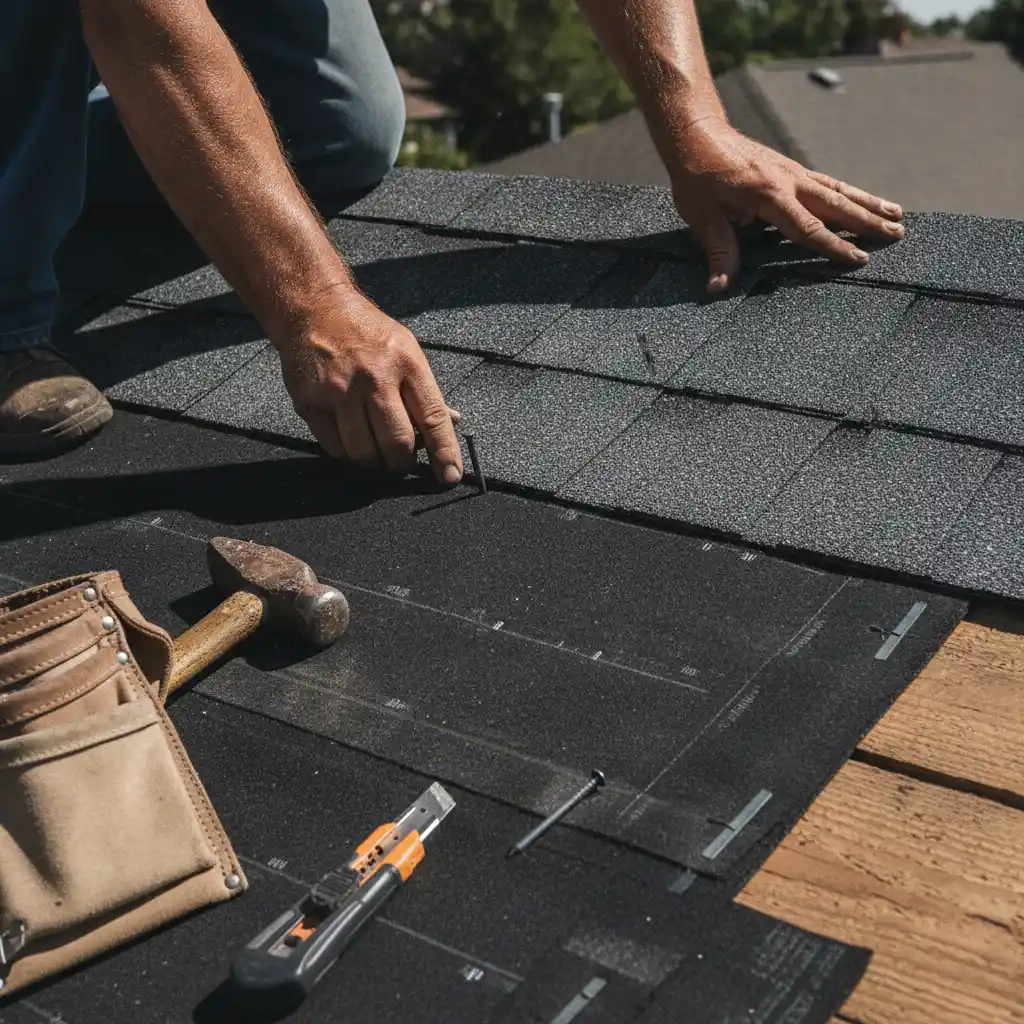
Our team in action — roofing professionals serving Melbourne
How Melbourne’s Climate Affects Your Roofing Material Choice
No two Melbourne homes face identical roofing challenges, but several climate factors apply universally across the area and should guide every material decision.
UV Intensity: Melbourne averages over 230 sunny days per year. UV radiation is the primary driver of material degradation, causing asphalt to crack and lose granules, wood to rot, and poorly coated metals to oxidize. Materials with built-in UV resistance — metal with Kynar coatings, concrete and clay tile, and TPO membranes — significantly outlast alternatives in these conditions.
Coastal Salt Air: Homes within several miles of the Indian River Lagoon or the Atlantic coast are exposed to salt-laden air that aggressively attacks ferrous metals and degrades poorly sealed surfaces. Galvalume or aluminum-based metal roofing, clay tile, and TPO are the strongest performers in coastal zones. Standard galvanized steel should be avoided near the coast.
Hurricane and Wind Risk: Brevard County sits within a zone that can experience tropical storm and hurricane-force winds. Any material you choose must carry a verified wind uplift rating that meets Florida Building Code minimums — 130 mph or higher in most Melbourne areas. Always request product approval documentation from your contractor.
Rainfall and Humidity: Melbourne averages over 50 inches of rainfall annually, concentrated in a June–September wet season. Materials prone to absorbing moisture or encouraging algae growth — like untreated wood shake — are poor fits. Metal, tile, and membrane systems resist moisture-related degradation most effectively.
HOA and Code Compliance: Match your preferred material to your HOA requirements and verify Florida Building Code product approvals before purchasing. Your contractor should pull permits and confirm compliance as part of every project.
Roofing Materials Available in Melbourne, FL
Asphalt Shingles (3-Tab)
Three-tab asphalt shingles are the most basic and affordable roofing option available. They consist of a single flat layer with cutouts that give the appearance of three separate shingles. While widely used across the country, their performance in Melbourne’s climate is limited. The intense UV exposure and high humidity degrade the asphalt binder faster than in northern climates, and their lower wind resistance ratings — often around 60 to 70 mph — fall short of Florida’s hurricane requirements without special installation methods. They are rarely the recommended choice for new Melbourne roofs.
- Pros: Lowest upfront cost, widely available
- Cons: Poor wind and UV resistance, shorter lifespan in Florida heat
- Typical lifespan in Melbourne: 10–15 years
- Approximate cost: $80–$120 per square installed
Architectural / Dimensional Shingles
Architectural shingles represent a significant upgrade over 3-tab shingles. Their multi-layer construction creates a dimensional appearance that mimics wood shake or slate, while providing considerably better durability. Many architectural shingle products carry wind ratings of 110 to 130 mph and some are Miami-Dade approved — making them a viable option in Brevard County. They hold up better to UV degradation than 3-tab, and their heavier weight improves resistance to wind uplift. For budget-conscious Melbourne homeowners who still need code compliance, architectural shingles are a popular middle-ground solution.
- Pros: Better wind rating, attractive appearance, moderate cost
- Cons: Still susceptible to algae growth in humid conditions, shorter life than metal or tile
- Typical lifespan in Melbourne: 20–25 years
- Approximate cost: $150–$220 per square installed
Metal Roofing
Metal roofing — including standing seam, corrugated panels, and metal shingles — is one of the best-performing material categories in Melbourne’s climate. Metal reflects solar radiation rather than absorbing it, significantly reducing attic temperatures and cooling loads. It is highly resistant to wind, with many systems rated to 160 mph or beyond. Properly coated metal resists salt air corrosion effectively, making it well-suited for Melbourne’s coastal proximity. Metal is also fire-resistant (Class A rated) and largely impervious to the algae and mold growth that plague shingle roofs in humid Florida conditions.
- Pros: Exceptional wind resistance, energy efficient, long lifespan, salt air resistant
- Cons: Higher upfront cost, can be noisy during heavy rain without proper insulation
- Typical lifespan in Melbourne: 40–70 years
- Approximate cost: $350–$600 per square installed
Concrete or Clay Tile
Concrete and clay tile roofing is iconic throughout Florida and extremely well-suited to Melbourne’s environment. Tile is naturally resistant to salt air, UV radiation, and fire, and when properly installed, carries wind ratings that meet or exceed Florida Building Code requirements. Clay tile, in particular, has an exceptional track record in coastal communities. Tile roofs require a structurally reinforced roof deck due to their significant weight — a factor that must be assessed during any replacement project. Many Melbourne HOAs in tile communities require tile replacement to maintain neighborhood uniformity.
- Pros: Outstanding longevity, fire and UV resistant, excellent curb appeal
- Cons: Heavy weight requires structural assessment, higher cost, individual tiles can crack
- Typical lifespan in Melbourne: 40–50 years (concrete), 50+ years (clay)
- Approximate cost: $400–$700 per square installed
Flat / TPO Roofing
Thermoplastic Polyolefin (TPO) membrane roofing is the standard choice for flat or low-slope roofs — common on commercial buildings, additions, and some modern-style Melbourne homes. TPO is a single-ply white membrane that is highly reflective, making it an energy-efficient choice in Florida’s intense heat. It is resistant to UV degradation, punctures, and chemical exposure. Proper installation and regular maintenance are critical, as standing water on improperly sloped flat roofs can lead to membrane failure. TPO is not suitable for pitched residential roofs but performs excellently in its intended applications.
- Pros: Excellent energy efficiency, heat-weldable seams, cost-effective for flat applications
- Cons: Requires proper drainage design, not for pitched roofs
- Typical lifespan in Melbourne: 15–25 years
- Approximate cost: $200–$350 per square installed
Modified Bitumen
Modified bitumen is an asphalt-based roofing system reinforced with polyester or fiberglass and modified with rubber or plastic polymers for enhanced flexibility and durability. It is applied in multiple layers and is primarily used on low-slope or flat roofs. Modified bitumen performs well in Melbourne’s heat and handles foot traffic better than single-ply membranes, making it practical for roofs that require occasional access. Its multi-layer nature provides redundancy against leaks. While not as energy-efficient as TPO, reflective cap sheets are available to improve solar performance.
- Pros: Durable multi-layer system, handles foot traffic, good waterproofing
- Cons: Less reflective than TPO standard, shorter lifespan than tile or metal
- Typical lifespan in Melbourne: 15–20 years
- Approximate cost: $250–$400 per square installed
Ready for Roofing Materials? Get Your Free Estimate Today.
Melbourne Roofing Experts serves Melbourne and the surrounding area — we’ll be on-site within 24 hours.
📞 Call (321) 415-5164Why Melbourne Homeowners Trust Melbourne Roofing Experts for Material Selection
Selecting the right roofing material is only the beginning — proper installation by a qualified local contractor determines whether that material performs to its potential. Melbourne Roofing Experts brings deep material knowledge and local experience together to help homeowners make confident, well-informed decisions.
Roofing Materials FAQ for Melbourne Homeowners
What is the best roofing material for Melbourne, FL’s climate?
For most Melbourne homeowners, metal roofing and concrete or clay tile offer the best overall performance. Both are highly resistant to UV radiation, salt air, wind, and fire — the four primary climate challenges in this area. Metal is the top choice for energy efficiency and longevity; tile is ideal for those prioritizing aesthetics and traditional Florida character. Architectural shingles offer a solid middle ground for homeowners working within a tighter budget.
How do roofing material costs compare in Melbourne?
Approximate installed costs per square (100 sq ft) in Melbourne generally range as follows: 3-tab asphalt ($80–$120), architectural shingles ($150–$220), TPO flat roofing ($200–$350), modified bitumen ($250–$400), metal roofing ($350–$600), and concrete or clay tile ($400–$700). These ranges reflect material and labor costs and can vary based on roof complexity, accessibility, and current material pricing.
How long will each roofing material last in Melbourne?
Lifespan varies significantly by material in Florida’s demanding climate. Three-tab shingles typically last 10–15 years, architectural shingles 20–25 years, TPO and modified bitumen 15–25 years, metal roofing 40–70 years, concrete tile 40–50 years, and clay tile 50 years or more. Florida’s UV intensity and humidity mean that national average lifespan estimates often overstate real-world performance for asphalt-based products locally.
Do I need HOA approval to change my roofing material in Melbourne?
In many Melbourne neighborhoods, yes. HOAs may restrict material type, color, and profile to maintain community aesthetics. Some tile communities require replacement in kind. Before selecting a new material, review your HOA’s CC&Rs and submit the required approval documentation. Your roofing contractor should be familiar with this process and can help prepare the necessary product information and samples for HOA review.
Which roofing material is most energy efficient for Melbourne homes?
TPO flat roofing and standing seam metal roofing are the top performers for energy efficiency in Melbourne. Both reflect significant amounts of solar radiation rather than absorbing it, which reduces attic temperatures and lowers air conditioning loads. Concrete and clay tile also perform well due to their thermal mass and the air gap created beneath the tile profile. Lighter-colored architectural shingles with Energy Star ratings can also contribute to cooling efficiency when compared to dark-colored alternatives.
What fire rating should I look for in a Melbourne roofing material?
Florida’s building code requires a minimum Class A fire rating for roofing materials in most residential zones. Fortunately, the strongest performers in Melbourne’s climate — metal, concrete tile, clay tile, and TPO — all carry Class A fire ratings. Architectural asphalt shingles also achieve Class A ratings through their fiberglass mat construction. Wood shake is generally not recommended in Florida due to fire risk and limited wind resistance.
Does roofing material affect my homeowner’s insurance premium in Florida?
Yes — significantly. Florida’s insurance market is highly sensitive to roof material, age, and condition. Metal roofing and impact-resistant architectural shingles often qualify homeowners for meaningful insurance discounts due to their superior wind and impact resistance. Older asphalt shingle roofs, particularly those over 10–15 years old, may face coverage restrictions or higher premiums. Consult your insurance agent when evaluating material options — the long-term insurance savings from upgrading to metal or tile can help offset the higher initial investment.
Can I install a new roofing material over my existing roof?
Florida Building Code generally allows one layer of shingles over an existing layer in some circumstances, but this approach has significant drawbacks and limitations. It adds weight to the structure, can mask underlying damage, and may not meet current wind resistance standards. Most roofing professionals in Melbourne recommend full tear-off and replacement to ensure proper inspection of the decking, correct installation of underlayment, and full code compliance. Metal and tile installations always require a clean deck surface.
Get Expert Roofing Material Advice in Melbourne
Still weighing your options? Melbourne Roofing Experts offers free, no-obligation roofing material consultations for Melbourne homeowners. Our experienced team will assess your home’s structure, discuss your budget, review your HOA requirements, and help you identify the material that delivers the best long-term value in Melbourne’s specific climate — not just the lowest price today.
We take the guesswork out of one of your home’s most important investments. Whether you’re drawn to the longevity of metal, the classic appeal of tile, or the budget-friendly performance of architectural shingles, we’ll give you honest, expert guidance backed by years of local experience.
Call us today at (321) 415-5164 to schedule your free material consultation and take the first step toward a roof that protects your Melbourne home for decades to come.